


In modern machinery manufacturing, the casting process is a crucial step in the production of key components. As core components of various equipment, the quality of the inner surfaces of castings directly determines the operational safety and service life of the equipment. However, the inner surfaces of castings are complex, confined, and often enclosed or semi-enclosed. Traditional inspection methods have long faced difficulties in detection, positioning, and assessment. The advent of industrial endoscopes has revolutionized this situation, becoming a core technology for industrial casting inner surface inspection.
Core Application Scenarios of Industrial Side-Viewing Endoscopes in Industrial Casting Inner Surface Inspection
With their flexible detection, high-definition imaging, and flexible control, industrial endoscopes can penetrate deep into the complex interior spaces of castings, enabling comprehensive inspection of the inner surfaces of castings of various types and specifications.
The camera of a side-view endoscope is mounted at a wide angle of 90°-120° relative to the probe axis (some models can rotate 360°). The imaging direction is perpendicular to the direction of probe advancement, equivalent to a "sideways" perspective. Images of the inner wall to the side of the probe are transmitted to the camera. Combined with an adjustable side illumination source, it can cover the inner wall 360° around the probe or a specific lateral area.

The side-viewing angle of a side-viewing endoscope gives it an advantage in inspecting castings with curved surfaces, stepped holes, threaded holes, and annular cavities. It is particularly suitable for inspecting the inner wall area circumferentially or laterally to the side of the probe. Typical application scenarios include:
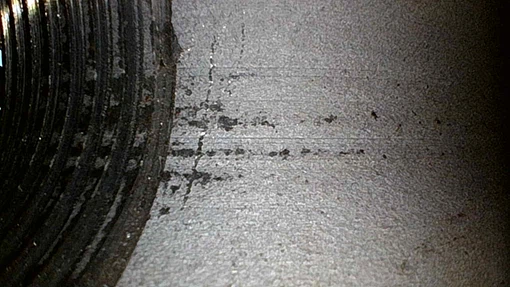
Inspecting the sidewalls of curved castings
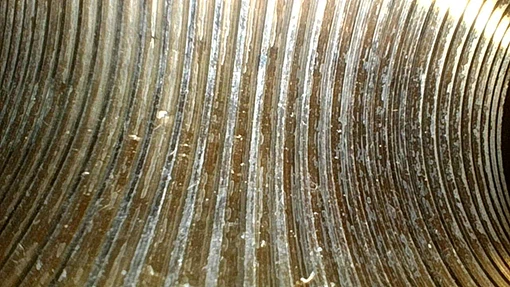
Inspecting the vertical surfaces of stepped holes/countersunk holes

Inspecting the inner wall of annular castings
Significant Advantages of Industrial Endoscopes in Inspecting the Inner Walls of Industrial Castings
Compared to traditional inspection methods, industrial endoscopes offer irreplaceable advantages in inspecting the inner walls of industrial castings, primarily in terms of efficiency, accuracy, cost, and operational safety:
High Inspection Efficiency: No Disassembly Required, Fast Response
Industrial endoscopes utilize a non-destructive testing mode, eliminating the need to disassemble the casting or equipment. Inspection can be performed quickly through pre-defined inspection and process holes. Furthermore, the inspection process can be captured and saved in real time, meeting the needs of businesses for rapid inspection and rapid decision-making.
High-Precision Inspection: High-Definition Imaging, Detecting Subtle Defects
Industrial endoscopes are equipped with high-definition cameras and specialized lighting systems, enabling clear capture of subtle textures and defect characteristics on inner surfaces.
Low Inspection Cost: Reduced Wear and Maintenance Expenses
Industrial endoscopes offer low maintenance costs, enabling long-term use after a single investment. They are suitable for inspecting castings of varying types and specifications, eliminating the need for specialized inspection tools for each casting, further reducing a company's inspection equipment investment costs.
High Operational Safety: Safeguarding Personnel Safety from Hazardous Environments
Industrial endoscopes enable "remote inspection." Inspectors simply operate the endoscope probe from a safe area, insert it into the casting, and observe the inspection image on the display screen, eliminating the need for direct contact with the hazardous environment.
Conclusion
In the modern machining industry, high-quality castings are crucial for ensuring product performance. However, traditional manual inspection methods are no longer able to meet the high-precision requirements for complex inner wall structures. Industrial endoscopes, with their advantages of being non-destructive, highly efficient, precise, and safe, have become a core technology for inspecting the inner walls of industrial castings, and are widely used in a variety of fields, including automotive, aerospace, petrochemical, nuclear power, and engineering machinery. In the future, as technologies like artificial intelligence and the Internet of Things merge with industrial endoscopes, they will enable more advanced features such as intelligent defect recognition, automatic inspection report generation, and remote collaborative inspection. This will further enhance the intelligence level of industrial casting inner wall inspection and provide stronger technical support for the high-quality development of industrial manufacturing.


