
As an endoscopic camera seller, the most frequently asked product-related parameters in customer consultations are the field of view, focal length, depth of field, and object distance. The values of these four parameters are closely related to the usage environment and scenarios of the product. Below, the editor will explain in detail these four parameters of the endoscope camera and their relationship.
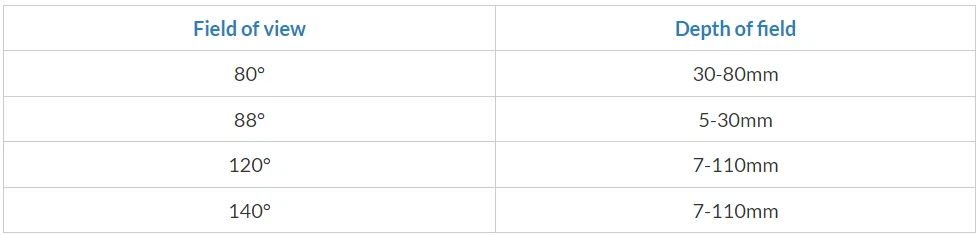
refers to the wide range that the lens of the endoscope camera can see. A large angle can provide a wider field of view and is suitable for detecting a wide range of targets; a small angle can provide high-precision observation of small targets.
In an endoscope camera, the distance from the optical center point of the lens to the CMOS sensor of the camera is the focal length. For endoscopes, the focal length determines the ability to focus light after it passes through the lens.
Object distance refers to the distance between the object to be observed and the endoscope lens. Object distance is an important factor in determining the size and clarity of endoscopic imaging. A smaller object distance will result in a larger image, and distant details may become blurred or unclear; a larger object distance will result in a smaller image, but better clarity can be maintained.
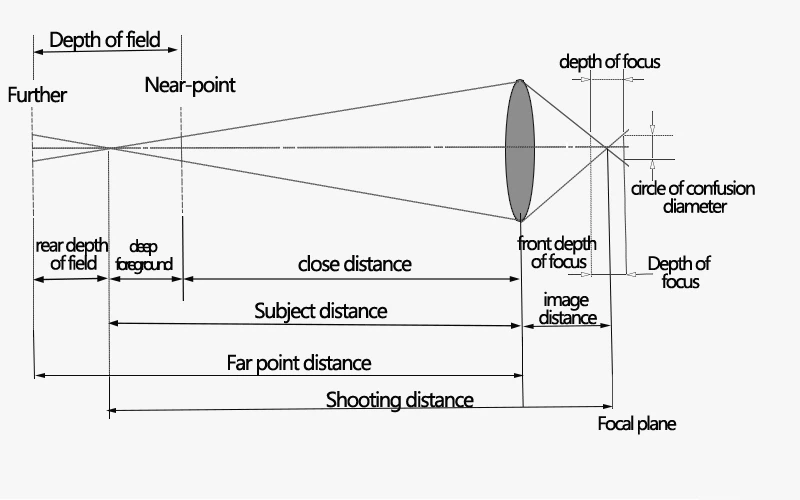
The four references are complementary to each other:
(1) An endoscope with a shorter focal length can provide a larger field of view and a closer observation distance, but the image may be out of focus or distorted; while an endoscope with a longer focal length can provide a clearer image , but the field of view may be narrower.
(2) With a large field of view, the imaging width and depth are relatively large, making it suitable for observing a larger observation range. With a small field of view, the imaging width and depth are relatively small, which is suitable for observing smaller details and requiring high imaging details.
Users need to pay attention to the following points when choosing an endoscope camera:
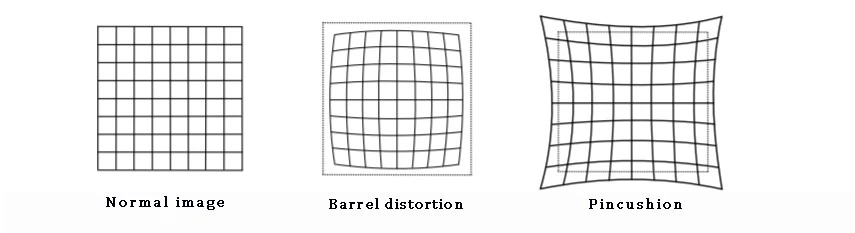
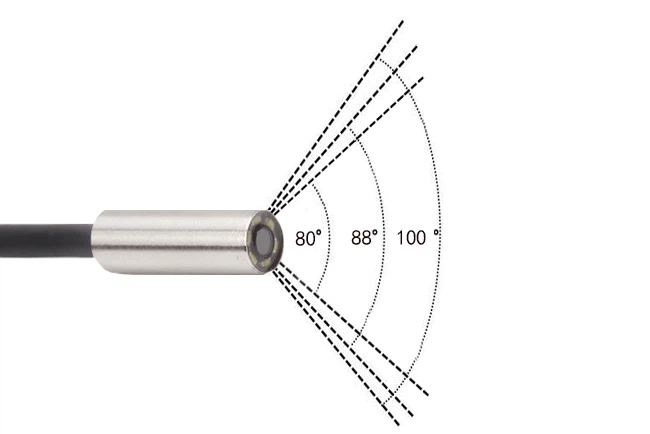
(1) Size of the object to be detected: If the object to be detected is large, choosing a larger field of view can ensure that the entire object can be observed; however, the larger the field of view, the greater the distortion, and the clarity of the product's imaging will also be affected. certain influence. And if the object being detected is smaller, choosing a smaller field of view can provide better detailed observation and clearer images.
(2) The depth of the pipeline of the object to be detected is the distance between the lens and the object to be detected. If the object to be detected is closer, choosing a close-focus endoscope with a short starting point of the depth of field range can obtain a clearer image.
(3) Restrictions on the operating environment: Restrictions on the operating environment (such as small space, restricted field of view, etc.) may limit the choice of field of view an